
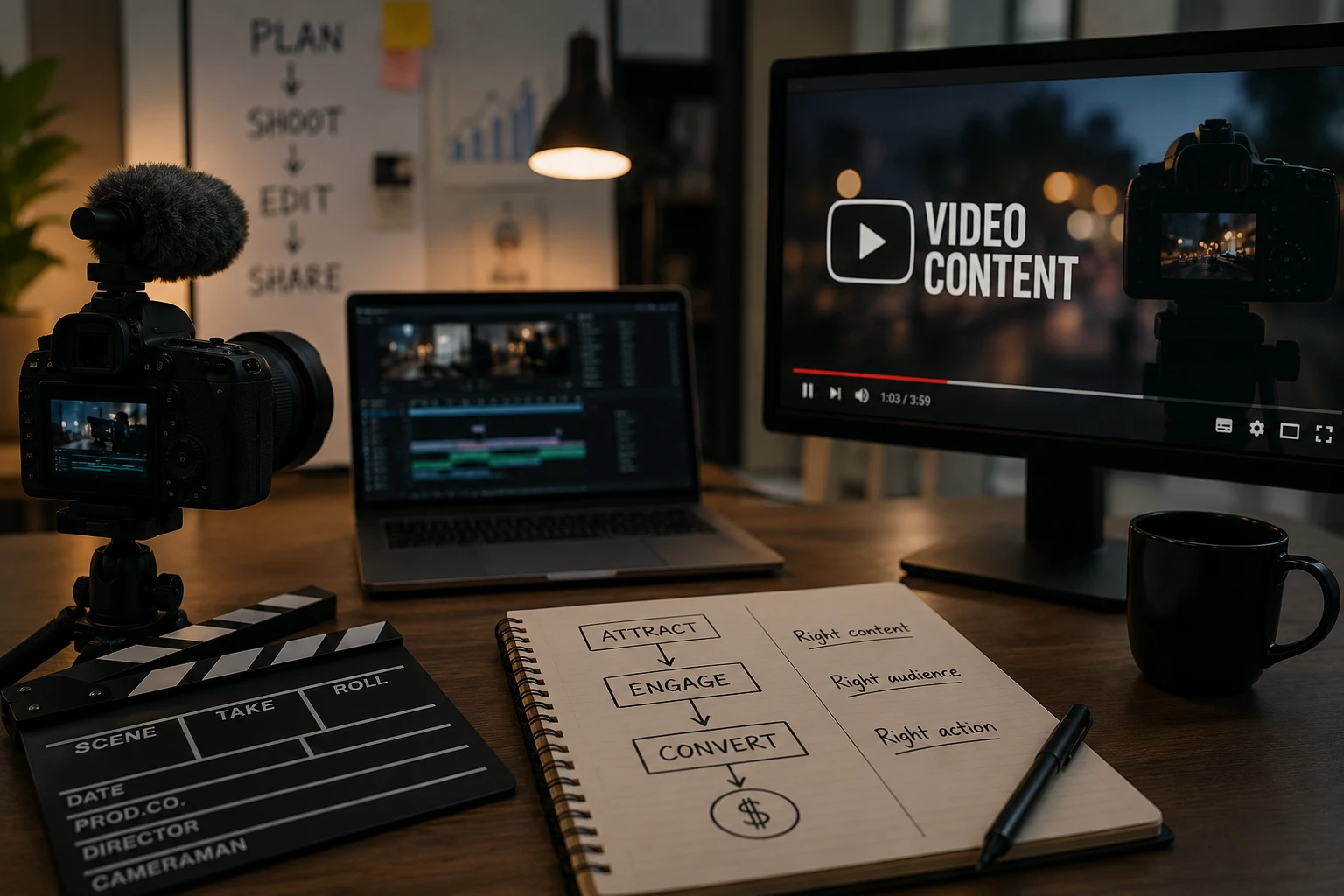
Views are the easiest metric to celebrate and the hardest to bank. Plenty of brands have a video that reached six figures of impressions and produced almost no enquiries, while a modest clip with a few thousand views quietly filled the sales pipeline for a month.
The difference is rarely production quality. It is whether the content was built as a system with a next step, or as a standalone piece of media.
Why Reach Alone Does Not Convert
A view means someone paused. It says nothing about whether they understood your offer, believed it, or knew what to do next. Content that is designed only to be watched will be watched and then forgotten, because nothing in it asks the audience to move.
Conversion happens when three things line up: the right message reaches someone at the right stage of consideration, and there is an obvious, low-friction next action. Most content fails on the second and third points.
Map Content to Stages, Not to Platforms
Instead of asking what to post on each platform, start by asking what a buyer needs at each stage of their decision.
Awareness: earn attention from people who do not know you
This content is short, front-loaded, and built around a problem your audience already recognises. It should not open with your company history. Formats that work here include quick demonstrations, before-and-after transformations, common mistakes in your category, and behind-the-scenes glimpses of how the work is done.
Consideration: give them reasons to believe
Once someone is interested, they want evidence. This is where case studies, process explainers, customer interviews, and product comparisons earn their place. Longer runtimes are acceptable because the audience has already chosen to pay attention.
Decision: remove the last objections
At this stage the questions become practical. What does it cost, how long does it take, what happens if something goes wrong, who else has done this. Pricing explainers, frequently asked questions answered on camera, onboarding walkthroughs, and detailed testimonials all belong here.
Retention: keep the relationship alive
Existing customers are the cheapest source of the next sale. Usage tips, new feature announcements, and customer spotlights extend value long after the first purchase and generate the social proof your awareness content depends on.
Most brands over-invest heavily in awareness and produce almost nothing for the consideration and decision stages, which is precisely where enquiries are won or lost.
Give Every Video One Job
Before production, write down the single action you want the viewer to take. Watch the next video, visit a page, send an enquiry, book a call, or leave a comment. If you cannot name it, the video is not finished being planned.
Then make that action easy. The landing page should match the promise made in the video, the enquiry form should be short, and the response time should be fast enough that interest has not cooled. A strong video pointing at a weak page is a common and expensive mismatch.
Measure the Metrics That Move the Business
View counts are useful for spotting reach problems, but they should not be the headline. More telling indicators include:
- Retention curves. Where viewers stop watching tells you exactly which part of your message is not working.
- Saves and shares. These signal genuine value far more reliably than likes.
- Click-through to your site or profile. The first real sign of intent.
- Enquiry quality. Ten well-qualified leads beat a hundred vague messages.
- Assisted conversions. Video often influences a sale without being the final click, so look at the whole path rather than the last touch.
Set up tracking before publishing, not after. Retrofitting measurement onto a campaign that has already run means accepting incomplete answers.
Build in Batches, Then Improve With Evidence
A funnel does not have to be built all at once. Start with one strong asset per stage, run it long enough to gather real data, and expand the stage that shows the most promise. Batch production keeps this affordable, since a single planned shoot day can produce awareness cutdowns, a consideration explainer, and decision-stage answers from the same setup.
After a few cycles, you stop guessing. You know which hooks hold attention, which proof points close deals, and where prospects hesitate. That knowledge is the real asset, and it only accumulates if content is produced with a plan rather than in isolated bursts.
Turning Content Into a System
Content that converts is content with a destination. It knows who it is for, where they are in the decision, and what should happen next.
This is the approach behind our content-driven marketing work at Axvision Media, supported by a long-term visual system so every asset reinforces the same brand. If your video content is getting attention but not enquiries, let’s review the direction together.