
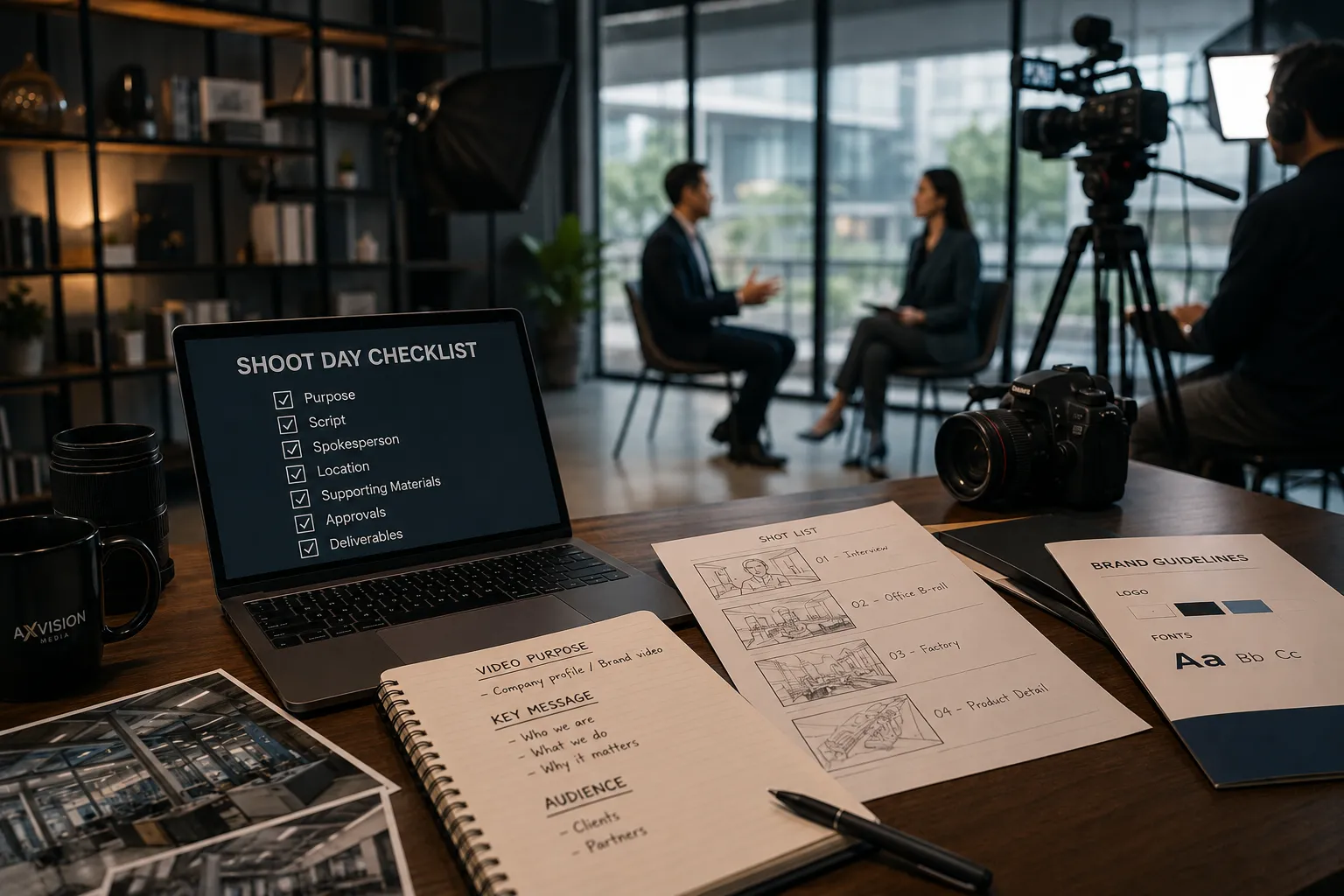
Most of the problems that appear on a corporate shoot were created weeks earlier, in the planning stage. Crew waiting for approval on a script, a spokesperson reading lines for the first time on camera, a factory floor that turns out to be too noisy to record clean audio in. None of these are production failures. They are preparation gaps.
If your company is commissioning a corporate video for the first time, here is what actually needs to be settled before anyone unpacks a camera.
1. Agree on One Purpose, Not Five
The most expensive mistake in corporate video is trying to make a single film serve every audience at once. Recruitment, investor relations, trade exhibitions, and sales enablement all need different lengths, tones, and endings.
Decide the primary use case first and let everything else be a secondary cut. A useful test: name the one place this video will be shown most often. If your team cannot agree on that in a single sentence, the brief is not ready.
2. Lock the Script Before the Shoot, Not After
Corporate scripts often pass through management, technical teams, and legal. That process takes time, and it cannot happen while a crew is on site. Every unresolved sentence becomes an unusable take.
Circulate the script early, gather all rounds of feedback in one document, and confirm a genuinely final version at least a week before production. Pay particular attention to technical claims, product specifications, and certifications, since these are the lines most likely to be revised late.
3. Choose Your On-Camera People Carefully
The most senior person is not always the right person. Look for someone who explains things clearly in ordinary conversation, is comfortable being watched, and is available for the full block of time you need, not for a rushed twenty minutes between meetings.
Then prepare them properly. Share the questions in advance, but discourage word-for-word memorisation, since it almost always reads as stiff on screen. A short rehearsal call does more for delivery than any amount of direction on the day.
Wardrobe notes worth sending in advance
- Solid mid-tone colours read best. Avoid tight stripes, fine checks, and busy patterns, which can shimmer on camera.
- Pure white and pure black are harder to light well than most people expect.
- Bring a spare top. Coffee and long days are a reliable combination.
- Keep jewellery quiet, as anything that clinks will be picked up by the lapel microphone.
4. Walk the Location Before You Commit to It
A room that looks good to the eye can be difficult to shoot in. On a site visit, check the things that cannot be fixed in post: background noise from air conditioning, machinery, or nearby construction, ceiling height and available power, window light that will shift over the day, and whether reflective glass or glossy surfaces will bounce lights back into frame.
For factory and warehouse environments, confirm safety requirements early. Some sites require induction briefings, personal protective equipment, or written permission before filming, and that paperwork should not be discovered on the morning of the shoot.
If your own premises are not suitable, a controlled environment is often faster and cheaper than fighting a difficult location. Our studio space in Bukit Mertajam is set up for exactly this kind of production.
5. Prepare the Supporting Material Early
Corporate videos usually need more than interview footage. Gather these before production begins:
- Brand guidelines, logo files in vector format, and approved brand fonts.
- Product photography, technical diagrams, or CAD renders you want featured.
- Approved figures, awards, and certifications, with confirmation of what may be shown publicly.
- Client or partner logos, along with written permission to display them.
Chasing a high-resolution logo during the edit is a small task that delays delivery more often than it should.
6. Decide Who Approves, and When
Long revision cycles are rarely caused by the edit itself. They are caused by unclear approval. Name one decision-maker who consolidates feedback, set the number of revision rounds in the agreement, and schedule review dates in advance so the file does not sit in an inbox while a launch date approaches.
7. Plan the Deliverables You Will Actually Need
Before the shoot, list every format the video will live in: a full-length version for your website, short vertical cuts for social platforms, a silent captioned version for exhibition screens, and stills pulled from the footage. Each of these affects framing and shot selection on the day, so they belong in the plan rather than the edit.
Preparation Is the Cheapest Part of Production
A well-prepared shoot day is calmer, faster, and produces material you will still be happy to use two years later. Everything on this list costs time rather than money, and it is the least expensive way to protect a production budget.
Axvision Media produces corporate and commercial video from bases in Penang and Kuala Lumpur, for brands across Malaysia and Singapore. If you have a project coming up, tell us about it and we will help you scope it properly. You can also see how we have approached similar work in our project archive.